
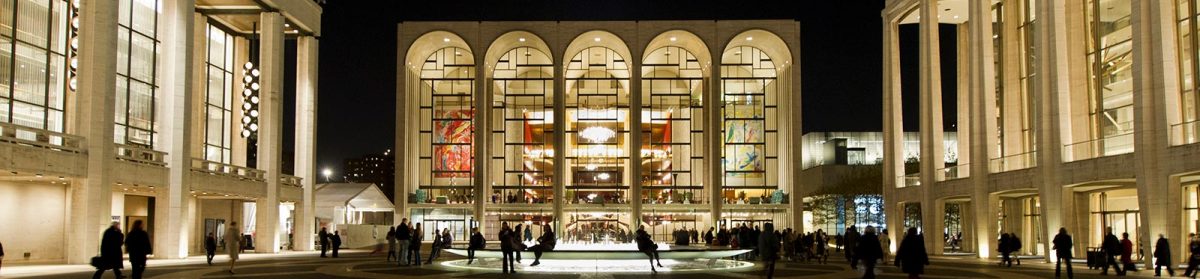
In this 11th year, over ten nights performances from the Met’s Live in HD series will be shown starting with a screening of FUNNY FACE in a special co-presentation with Film at Lincoln Center. Screenings run from August 23 through September 2. There will be 3000 seats in the Plaza in front of the Opera House with an additional standing room area. Cancellations due to thunder/lighting or high wind will not be rescheduled.
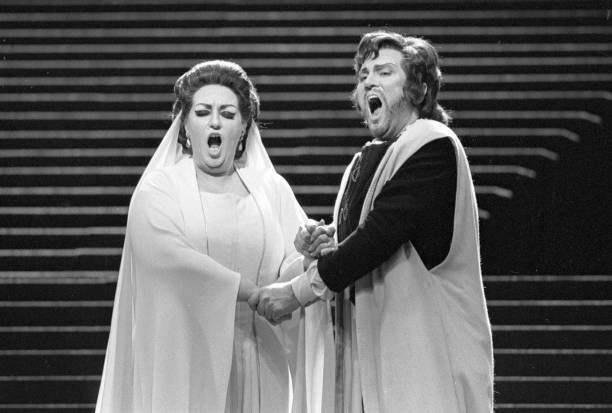
Original Air Date: 03/09/1974
Levine; Caballé, Gedda, Milnes, Díaz
MOD Audio SID.19340642
This is a performance where the whole is greater than the sum of its parts. If Caballe does not have every note in place, she is still very near the top of her considerable form, and the ensemble reflects the new production intensity and first appearance of a major Verdi opera in the Met repertory. Gedda has the most performances of Arrigo, the challenging tenor role. Tucker was scheduled for a run (including broadcast) the year he died, but none of the hearty tenors of the past had the right timing– no Corelli, Bergonzi, and only five for Domingo, and he was gone. This performance is available in Met Opera on Demand (MOoD) and is a strong performance.

L’ELISIR D’AMORE:Donizetti
Rudolf; Pavarotti, Blegen, Flagello, Reardon
Original Air Date: 04/06/1974
MOD Audio
SID.19440104
“NY Post S Jenkins: In last night’s “”L’Elisir d’Amore”” the Metropolitan Opera pulled off the equivalent of a grand slam home run: a performance that must have delighted the tired businessman, satisfied the opera buff and absolutely satiated the voice lover. And all this wonder came from the musical and dramatic ability of the two leads: Judith Blegen and Luciano Pavarotti.
Gaetano Donizetti’s “”L’Elisir,”” though one of the most popular of Italian comic operas, does not play itself. To be successful, the principals must constantly work to make the audience see that these are real people caught in a comic situation.
Brilliantly crafted by Felice Romani, the librettist of “”Norma,”” “”L’Elisir’s”” book contains the classic tear through a smile: several moments when all the buffoonery is ripped away and the audience sees that Nemorino really loves Adina, and she returns his love.
Miss Blegen and Mr. Pavarotti never ceased to create their characters. Though they sang superlatively, their greatest triumph lay in their complete believability.
Pavarotti, now tipping the scales at around 300, moves on stage with the lightness of a man a quarter of his size, and his marvelously expressive face constantly emotes. Nemorino’s frustrations, his joy and his ultimate victory passed as a motion picture on the. tenor’s countenance.
And what do you say about Miss Blegen except that she is just about the prettiest girl to appear on the Met stage, ever. She also manages to be a coquette without ever once being overcute or too coy. The face, the figure, the attractiveness, how lucky is opera not to have lost her to Broadway!
Vocally, Pavarotti proved himself again the emperor of lyric tenors. Style, finesse, musical taste and a faultless vocal instrument all coalesced in his Nemorino. Some roles fit even a great voice better than others, and from first to last Nemorino is his property. In “”Una furtiva lagrima”” the sheen of his voice seemed to be encircled in a column of air, and his concluding high C in the “”Venti Scudi”” duet sang with ease.
Miss Blegen, whose tone is bright where a more Italianate soprano might be mellow, sang with such authority and finesse that she silenced any possible caviling. Her “”Prendi per me sei libero”” in the last scene, with its descending two-octave run from a high C, glistened as does dew on summer grass.
Mario Sereni contributed his familiar Belcore, one of the baritone’s best roles at the Met, and Ezio Flagello offered up his Dulcamara. Though he sings more of the role than some others who perform it, he has little humor in his voice or presence. It is a solid performance, but lacks the element that makes the old quack really lovable.
The greatest tributes to the brilliance of Miss Blegen, who learned her role in Italian in about 10 days, and Pavarotti were that they overcame the heavyhanded, rather Germanic but solid performance by Max Rudolf. A distinguished maestro with many great performances at the Met in the early Bing years, Rudolf was never known for his Donizetti.
And in almost every way, he seemed to try to knock the bubbles out of the singer’s champagne. With this cast he couldn’t, and there were no unhappy patrons visible.”
L’ELISIR D’AMORE:Donizetti
Rudolf; Pavarotti, Blegen, Flagello, Reardon
Original Air Date: 04/06/1974
MOD Audio
SID.19440320
“NY Post S Jenkins: In last night’s “”L’Elisir d’Amore”” the Metropolitan Opera pulled off the equivalent of a grand slam home run: a performance that must have delighted the tired businessman, satisfied the opera buff and absolutely satiated the voice lover. And all this wonder came from the musical and dramatic ability of the two leads: Judith Blegen and Luciano Pavarotti.
Gaetano Donizetti’s “”L’Elisir,”” though one of the most popular of Italian comic operas, does not play itself. To be successful, the principals must constantly work to make the audience see that these are real people caught in a comic situation.
Brilliantly crafted by Felice Romani, the librettist of “”Norma,”” “”L’Elisir’s”” book contains the classic tear through a smile: several moments when all the buffoonery is ripped away and the audience sees that Nemorino really loves Adina, and she returns his love.
Miss Blegen and Mr. Pavarotti never ceased to create their characters. Though they sang superlatively, their greatest triumph lay in their complete believability.
Pavarotti, now tipping the scales at around 300, moves on stage with the lightness of a man a quarter of his size, and his marvelously expressive face constantly emotes. Nemorino’s frustrations, his joy and his ultimate victory passed as a motion picture on the. tenor’s countenance.
And what do you say about Miss Blegen except that she is just about the prettiest girl to appear on the Met stage, ever. She also manages to be a coquette without ever once being overcute or too coy. The face, the figure, the attractiveness, how lucky is opera not to have lost her to Broadway!
Vocally, Pavarotti proved himself again the emperor of lyric tenors. Style, finesse, musical taste and a faultless vocal instrument all coalesced in his Nemorino. Some roles fit even a great voice better than others, and from first to last Nemorino is his property. In “”Una furtiva lagrima”” the sheen of his voice seemed to be encircled in a column of air, and his concluding high C in the “”Venti Scudi”” duet sang with ease.
Miss Blegen, whose tone is bright where a more Italianate soprano might be mellow, sang with such authority and finesse that she silenced any possible caviling. Her “”Prendi per me sei libero”” in the last scene, with its descending two-octave run from a high C, glistened as does dew on summer grass.
Mario Sereni contributed his familiar Belcore, one of the baritone’s best roles at the Met, and Ezio Flagello offered up his Dulcamara. Though he sings more of the role than some others who perform it, he has little humor in his voice or presence. It is a solid performance, but lacks the element that makes the old quack really lovable.
The greatest tributes to the brilliance of Miss Blegen, who learned her role in Italian in about 10 days, and Pavarotti were that they overcame the heavyhanded, rather Germanic but solid performance by Max Rudolf. A distinguished maestro with many great performances at the Met in the early Bing years, Rudolf was never known for his Donizetti.
And in almost every way, he seemed to try to knock the bubbles out of the singer’s champagne. With this cast he couldn’t, and there were no unhappy patrons visible.”
L’ELISIR D’AMORE:Donizetti
Rudolf; Pavarotti, Blegen, Flagello, Reardon
Original Air Date: 04/06/1974
MOD Audio
SID.19440530
“NY Post S Jenkins: In last night’s “”L’Elisir d’Amore”” the Metropolitan Opera pulled off the equivalent of a grand slam home run: a performance that must have delighted the tired businessman, satisfied the opera buff and absolutely satiated the voice lover. And all this wonder came from the musical and dramatic ability of the two leads: Judith Blegen and Luciano Pavarotti.
Gaetano Donizetti’s “”L’Elisir,”” though one of the most popular of Italian comic operas, does not play itself. To be successful, the principals must constantly work to make the audience see that these are real people caught in a comic situation.
Brilliantly crafted by Felice Romani, the librettist of “”Norma,”” “”L’Elisir’s”” book contains the classic tear through a smile: several moments when all the buffoonery is ripped away and the audience sees that Nemorino really loves Adina, and she returns his love.
Miss Blegen and Mr. Pavarotti never ceased to create their characters. Though they sang superlatively, their greatest triumph lay in their complete believability.
Pavarotti, now tipping the scales at around 300, moves on stage with the lightness of a man a quarter of his size, and his marvelously expressive face constantly emotes. Nemorino’s frustrations, his joy and his ultimate victory passed as a motion picture on the. tenor’s countenance.
And what do you say about Miss Blegen except that she is just about the prettiest girl to appear on the Met stage, ever. She also manages to be a coquette without ever once being overcute or too coy. The face, the figure, the attractiveness, how lucky is opera not to have lost her to Broadway!
Vocally, Pavarotti proved himself again the emperor of lyric tenors. Style, finesse, musical taste and a faultless vocal instrument all coalesced in his Nemorino. Some roles fit even a great voice better than others, and from first to last Nemorino is his property. In “”Una furtiva lagrima”” the sheen of his voice seemed to be encircled in a column of air, and his concluding high C in the “”Venti Scudi”” duet sang with ease.
Miss Blegen, whose tone is bright where a more Italianate soprano might be mellow, sang with such authority and finesse that she silenced any possible caviling. Her “”Prendi per me sei libero”” in the last scene, with its descending two-octave run from a high C, glistened as does dew on summer grass.
Mario Sereni contributed his familiar Belcore, one of the baritone’s best roles at the Met, and Ezio Flagello offered up his Dulcamara. Though he sings more of the role than some others who perform it, he has little humor in his voice or presence. It is a solid performance, but lacks the element that makes the old quack really lovable.
The greatest tributes to the brilliance of Miss Blegen, who learned her role in Italian in about 10 days, and Pavarotti were that they overcame the heavyhanded, rather Germanic but solid performance by Max Rudolf. A distinguished maestro with many great performances at the Met in the early Bing years, Rudolf was never known for his Donizetti.
And in almost every way, he seemed to try to knock the bubbles out of the singer’s champagne. With this cast he couldn’t, and there were no unhappy patrons visible.”
L’ELISIR D’AMORE:Donizetti
Rudolf; Pavarotti, Blegen, Flagello, Reardon
Original Air Date: 04/06/1974
MOD Audio
SID.19440640
“NY Post S Jenkins: In last night’s “”L’Elisir d’Amore”” the Metropolitan Opera pulled off the equivalent of a grand slam home run: a performance that must have delighted the tired businessman, satisfied the opera buff and absolutely satiated the voice lover. And all this wonder came from the musical and dramatic ability of the two leads: Judith Blegen and Luciano Pavarotti.
Gaetano Donizetti’s “”L’Elisir,”” though one of the most popular of Italian comic operas, does not play itself. To be successful, the principals must constantly work to make the audience see that these are real people caught in a comic situation.
Brilliantly crafted by Felice Romani, the librettist of “”Norma,”” “”L’Elisir’s”” book contains the classic tear through a smile: several moments when all the buffoonery is ripped away and the audience sees that Nemorino really loves Adina, and she returns his love.
Miss Blegen and Mr. Pavarotti never ceased to create their characters. Though they sang superlatively, their greatest triumph lay in their complete believability.
Pavarotti, now tipping the scales at around 300, moves on stage with the lightness of a man a quarter of his size, and his marvelously expressive face constantly emotes. Nemorino’s frustrations, his joy and his ultimate victory passed as a motion picture on the. tenor’s countenance.
And what do you say about Miss Blegen except that she is just about the prettiest girl to appear on the Met stage, ever. She also manages to be a coquette without ever once being overcute or too coy. The face, the figure, the attractiveness, how lucky is opera not to have lost her to Broadway!
Vocally, Pavarotti proved himself again the emperor of lyric tenors. Style, finesse, musical taste and a faultless vocal instrument all coalesced in his Nemorino. Some roles fit even a great voice better than others, and from first to last Nemorino is his property. In “”Una furtiva lagrima”” the sheen of his voice seemed to be encircled in a column of air, and his concluding high C in the “”Venti Scudi”” duet sang with ease.
Miss Blegen, whose tone is bright where a more Italianate soprano might be mellow, sang with such authority and finesse that she silenced any possible caviling. Her “”Prendi per me sei libero”” in the last scene, with its descending two-octave run from a high C, glistened as does dew on summer grass.
Mario Sereni contributed his familiar Belcore, one of the baritone’s best roles at the Met, and Ezio Flagello offered up his Dulcamara. Though he sings more of the role than some others who perform it, he has little humor in his voice or presence. It is a solid performance, but lacks the element that makes the old quack really lovable.
The greatest tributes to the brilliance of Miss Blegen, who learned her role in Italian in about 10 days, and Pavarotti were that they overcame the heavyhanded, rather Germanic but solid performance by Max Rudolf. A distinguished maestro with many great performances at the Met in the early Bing years, Rudolf was never known for his Donizetti.
And in almost every way, he seemed to try to knock the bubbles out of the singer’s champagne. With this cast he couldn’t, and there were no unhappy patrons visible.”

PARSIFAL:Wagner
Steinberg; Thomas, Martin, Stewart, Macurdy, Meredith. Morris
Original Air Date: 04/20/1974
SID.19450105
This is William Steinberg’s farewell performance (only 25 altogether in four operas). It’s a very solid overall performance, and better conducted than Leopold Ludwig’s wan effort when the production was new. Next time out in 1979, James Levine begins a LONG run as the Parsifal conductor. Why is this performance not on MOoD. The cast is all-American, and except for Antony and Cleopatra, Jess Thomas is not represented on MOoD. 38 years later James Morris is the only survivor still on the Met stage. Not yet heard on Sirius are Hotter’s 2 Parsifal broadcasts (1952 as Amfortas and 1954 as Gurnemanz– his Met farewell). Hotter is well represented from Bayreuth, but worth hearing on Sirius. To me the big gaps are the 1966 Pretre Parsifal with Crespin and Konya under Pretre and the 1971 with Siepi’s classic Gurnemanz. Levine conducted a lot of Parsifal broadcasts in the 1980s, and the surprise omission is the 1985 with Vickers, Rysanek, MollThis is William Steinberg’s farewell performance (only 25 altogether in four operas). It’s a very solid overall performance, and better conducted than Leopold Ludwig’s wan effort when the production was new. Next time out in 1979, James Levine begins a LONG run as the Parsifal conductor. Why is this performance not on MOoD. The cast is all-American, and except for Antony and Cleopatra, Jess Thomas is not represented on MOoD. 38 years later James Morris is the only survivor still on the Met stage. Not yet heard on Sirius are Hotter’s 2 Parsifal broadcasts (1952 as Amfortas and 1954 as Gurnemanz– his Met farewell). Hotter is well represented from Bayreuth, but worth hearing on Sirius. To me the big gaps are the 1966 Pretre Parsifal with Crespin and Konya under Pretre and the 1971 with Siepi’s classic Gurnemanz. Levine conducted a lot of Parsifal broadcasts in the 1980s, and the surprise omission is the 1985 with Vickers, Rysanek, Moll
PARSIFAL:Wagner
Steinberg; Thomas, Martin, Stewart, Macurdy, Meredith. Morris
Original Air Date: 04/20/1974
SID.19450317
This is William Steinberg’s farewell performance (only 25 altogether in four operas). It’s a very solid overall performance, and better conducted than Leopold Ludwig’s wan effort when the production was new. Next time out in 1979, James Levine begins a LONG run as the Parsifal conductor. Why is this performance not on MOoD. The cast is all-American, and except for Antony and Cleopatra, Jess Thomas is not represented on MOoD. 38 years later James Morris is the only survivor still on the Met stage. Not yet heard on Sirius are Hotter’s 2 Parsifal broadcasts (1952 as Amfortas and 1954 as Gurnemanz– his Met farewell). Hotter is well represented from Bayreuth, but worth hearing on Sirius. To me the big gaps are the 1966 Pretre Parsifal with Crespin and Konya under Pretre and the 1971 with Siepi’s classic Gurnemanz. Levine conducted a lot of Parsifal broadcasts in the 1980s, and the surprise omission is the 1985 with Vickers, Rysanek, MollThis is William Steinberg’s farewell performance (only 25 altogether in four operas). It’s a very solid overall performance, and better conducted than Leopold Ludwig’s wan effort when the production was new. Next time out in 1979, James Levine begins a LONG run as the Parsifal conductor. Why is this performance not on MOoD. The cast is all-American, and except for Antony and Cleopatra, Jess Thomas is not represented on MOoD. 38 years later James Morris is the only survivor still on the Met stage. Not yet heard on Sirius are Hotter’s 2 Parsifal broadcasts (1952 as Amfortas and 1954 as Gurnemanz– his Met farewell). Hotter is well represented from Bayreuth, but worth hearing on Sirius. To me the big gaps are the 1966 Pretre Parsifal with Crespin and Konya under Pretre and the 1971 with Siepi’s classic Gurnemanz. Levine conducted a lot of Parsifal broadcasts in the 1980s, and the surprise omission is the 1985 with Vickers, Rysanek, Moll
PARSIFAL:Wagner
Steinberg; Thomas, Martin, Stewart, Macurdy, Meredith. Morris
Original Air Date: 04/20/1974
SID.19450749
This is William Steinberg’s farewell performance (only 25 altogether in four operas). It’s a very solid overall performance, and better conducted than Leopold Ludwig’s wan effort when the production was new. Next time out in 1979, James Levine begins a LONG run as the Parsifal conductor. Why is this performance not on MOoD. The cast is all-American, and except for Antony and Cleopatra, Jess Thomas is not represented on MOoD. 38 years later James Morris is the only survivor still on the Met stage. Not yet heard on Sirius are Hotter’s 2 Parsifal broadcasts (1952 as Amfortas and 1954 as Gurnemanz– his Met farewell). Hotter is well represented from Bayreuth, but worth hearing on Sirius. To me the big gaps are the 1966 Pretre Parsifal with Crespin and Konya under Pretre and the 1971 with Siepi’s classic Gurnemanz. Levine conducted a lot of Parsifal broadcasts in the 1980s, and the surprise omission is the 1985 with Vickers, Rysanek, MollThis is William Steinberg’s farewell performance (only 25 altogether in four operas). It’s a very solid overall performance, and better conducted than Leopold Ludwig’s wan effort when the production was new. Next time out in 1979, James Levine begins a LONG run as the Parsifal conductor. Why is this performance not on MOoD. The cast is all-American, and except for Antony and Cleopatra, Jess Thomas is not represented on MOoD. 38 years later James Morris is the only survivor still on the Met stage. Not yet heard on Sirius are Hotter’s 2 Parsifal broadcasts (1952 as Amfortas and 1954 as Gurnemanz– his Met farewell). Hotter is well represented from Bayreuth, but worth hearing on Sirius. To me the big gaps are the 1966 Pretre Parsifal with Crespin and Konya under Pretre and the 1971 with Siepi’s classic Gurnemanz. Levine conducted a lot of Parsifal broadcasts in the 1980s, and the surprise omission is the 1985 with Vickers, Rysanek, Moll

DIE ZAUBERFLÖTE:Mozart
Maag; Moffo, Alva, Gramm, Shane, Hines
Original Air Date: 12/15/1973
SID.20030104
This Zauberflote turns up as among the most commonly broadcast Flutes. I’m not sure why except that it is in generally good sound. Shane and Hines are the only two performers with 29 and 55 performances respectively who are major exponents of their roles. One thing that lowers the availability is that from 1941 until 1967, it was performed exclusively in English, and generally Sirius plays no performances performed in translation.
DIE ZAUBERFLÖTE:Mozart
Maag; Moffo, Alva, Gramm, Shane, Hines
Original Air Date: 12/15/1973
SID.20030423
This Zauberflote turns up as among the most commonly broadcast Flutes. I’m not sure why except that it is in generally good sound. Shane and Hines are the only two performers with 29 and 55 performances respectively who are major exponents of their roles. One thing that lowers the availability is that from 1941 until 1967, it was performed exclusively in English, and generally Sirius plays no performances performed in translation.
DIE ZAUBERFLÖTE:Mozart
Maag; Moffo, Alva, Gramm, Shane, Hines
Original Air Date: 12/15/1973
SID.20030642
This Zauberflote turns up as among the most commonly broadcast Flutes. I’m not sure why except that it is in generally good sound. Shane and Hines are the only two performers with 29 and 55 performances respectively who are major exponents of their roles. One thing that lowers the availability is that from 1941 until 1967, it was performed exclusively in English, and generally Sirius plays no performances performed in translation.

DER ROSENKAVALIER:Strauss
Böhm; Fassbaender, Lear, Jungwirth, Mathis, Dooley
Original Air Date: 02/23/1974
SID.20120106
Evelyn Lear is a solid Marschallin, even if she is somewhat eclipsed by Fassbaender and Mathis, among the two best performers to ever do these roles. Bohm is in the pit, and Jungwirth is an excellent Ochs (as he is on the Solti Crespin commercial.)
DER ROSENKAVALIER:Strauss
Böhm; Fassbaender, Lear, Jungwirth, Mathis, Dooley
Original Air Date: 02/23/1974
SID.20120422
Evelyn Lear is a solid Marschallin, even if she is somewhat eclipsed by Fassbaender and Mathis, among the two best performers to ever do these roles. Bohm is in the pit, and Jungwirth is an excellent Ochs (as he is on the Solti Crespin commercial.)
DER ROSENKAVALIER:Strauss
Böhm; Fassbaender, Lear, Jungwirth, Mathis, Dooley
Original Air Date: 02/23/1974
SID.20120749
Evelyn Lear is a solid Marschallin, even if she is somewhat eclipsed by Fassbaender and Mathis, among the two best performers to ever do these roles. Bohm is in the pit, and Jungwirth is an excellent Ochs (as he is on the Solti Crespin commercial.)
DER ROSENKAVALIER {238}
Octavian…………………Brigitte Fassbaender
Princess von Werdenberg……Evelyn Lear
Baron Ochs……………….Manfred Jungwirth
Sophie…………………..Edith Mathis
Faninal………………….William Dooley
Annina…………………..Mildred Miller
Valzacchi………………..Andrea Velis
Italian Singer……………Leo Goeke
Marianne…………………Carlotta Ordassy
Mahomet………………….Michael McClain
Princess’ Major-domo………Douglas Ahlstedt
Orphan…………………..Linda Mays
Orphan…………………..Joyce Olson
Orphan…………………..Valerie Lundberg
Milliner…………………Maureen Smith
Animal Vendor…………….Charles Kuestner
Hairdresser………………Donald Mahler
Notary…………………..Andrij Dobriansky
Leopold………………….John Trehy
Lackey…………………..Richard Firmin
Lackey…………………..Peter Sliker
Lackey…………………..Lou Marcella
Lackey…………………..Edward Ghazal
Faninal’s Major-domo………Robert Schmorr
Innkeeper………………..Charles Anthony
Police Commissioner……….Richard Best
Conductor………………..Karl Böhm
Levine; Caballé, Gedda, Milnes, Díaz
Original Air Date: 03/09/1974
MOD Audio
SID.20130214
RWW: This is a performance where the whole is greater than the sum of its parts. If Caballe does not have every note in place, she is still very near the top of her considerable form, and the ensemble reflects the new production intensity and first appearance of a major Verdi opera in the Met repertory. Gedda has the most performances of Arrigo, the challenging tenor role. Tucker was scheduled for a run (including broadcast) the year he died, but none of the hearty tenors of the past had the right timing– no Corelli, Bergonzi, and only five for Domingo, and he was gone. This performance is available in Met Opera on Demand (MOoD) and is a strong performance.
 the year he died, but none of the hearty tenors of the past had the right timing– no Corelli, Bergonzi, and only five for Domingo, and he was gone. This performance is available in Met Opera on Demand (MOoD) and is a strong performance.</p> </div> <div class=)
 the year he died, but none of the hearty tenors of the past had the right timing– no Corelli, Bergonzi, and only five for Domingo, and he was gone. This performance is available in Met Opera on Demand (MOoD) and is a strong performance.</p> </div> <div class=)